I Tried 12 Online Business Models. Here's What Actually Made Money.
Over the last several years, I've tried just about every online business model you can think of. Affiliate marketing, coaching, Etsy, dropshipping, courses, memberships, print on demand, agencies, Shopify, freelancing, YouTube, podcasting — and several others I've probably blocked out.
Some were a complete disaster. Others earned me hundreds of thousands of dollars. A couple crossed the million-dollar mark.
So if you're trying to figure out which online business model is actually worth your time, stick with me. I'm going to walk through every single one I've tried — what I liked, what I didn't, and honestly, how much each one has actually made me.
1. Affiliate Marketing
Affiliate marketing was one of the first things I tried, and it was heavily promoted at the time as the "easiest" path to online income. The appeal is obvious: you don't have to create a product. You just recommend other people's products and earn a commission — anywhere from 3% on physical/retail items to 30–50% on digital products.
Sounds great in theory.
In practice? It flopped for me.
Here's where it went wrong: because I hadn't created the product myself, I didn't believe in it deeply enough to talk about it with any real conviction. And that showed. I also hadn't yet learned the fundamentals — how to build an audience, how to do content marketing, how to actually sell. Affiliate marketing requires all of that, without giving you the reps of building your own product to learn it.
I still earn a few hundred to a few thousand dollars a month from affiliate marketing today — but that's passive income on products I already use and would mention anyway, with a large audience doing the heavy lifting. If you're just starting out with no audience? Definitely not where I'd point you.

2. Coaching
I've done coaching throughout my entire business journey — from the very beginning, about eight or nine years ago, all the way to today. And honestly, it's one of the best places to start.
The reason is simple: you don't need a product. If you have knowledge, skills, or expertise, you can put together a basic sales page in a matter of days and take it to market. I was a music teacher for about 10 years before I went online, and that background in teaching made coaching feel natural from day one.
What I love: low startup cost, fast to launch, genuinely profitable.

What I don't love: it's time-for-money. You're trading hours for dollars, and it takes real mental and emotional energy to do well. I can only work with a couple of clients at a time before it starts pulling me away from growing the rest of my business.
That said, some people build entire businesses around coaching 20, 30, 40 clients at a time — and make excellent money doing it. Most years I've earned between $15,000–$25,000 from coaching a handful of clients. Great starting point. Just know you'll probably want to build toward something more scalable over time.
3. Etsy
Full disclosure: Etsy is one of the businesses I've done the least with. I won't pretend to know more than I do.
What I can say is that it's competitive, and it requires more analytical, technical work than people expect. Learning Etsy's algorithm is a bit like learning SEO — there's real strategy involved, and it's not just about making beautiful products.
The creativity part is genuinely fun for me, especially as a change of pace from purely knowledge-based work. But because it's relatively new for me, I don't have much to report on earnings yet. Ask me again in a few months.
4. Dropshipping
I'll be direct: I never made money dropshipping. Not for lack of effort — I spent hundreds of hours researching products, ordering samples, and analyzing margins. But every product I tested either had quality issues, too much competition, or margins that just didn't work.
I'm not saying dropshipping doesn't work. I'm saying I spent probably a couple thousand dollars and hundreds of hours on it and couldn't get it to a profitable point before I moved on. If you go this route, go in with your eyes open — it takes real persistence and investment to find a product that works.
5. Online Courses
Courses are where things really changed for me.
I started trying to sell courses at the very beginning of 2017 and struggled for almost a full year before things clicked. But once they did? Six figures a year — consistently. And at this point, I've earned over a million dollars from courses alone.
Here's the honest truth about why courses fail for so many people: there are a lot of moving pieces. You need leads coming in. A working sales process. A checkout that functions. A solid course and a platform to host it. If any one of those is missing, nothing sells.
But here's the flip side — once you have all the pieces in place, courses become one of the most passive online business models I've ever run. The upfront investment is real. The long-term payoff is worth it.
6. Memberships
I launched my first membership in mid-2018, right around the time courses finally started working for me. And it was the single thing that took my revenue from "sporadic $1,000 months" to "consistent $10,000+ every month."
I still run that same membership today. It's earned well over a million dollars.
The key thing about memberships — and why I think so many online business owners should seriously consider them — is the recurring revenue. Once someone signs up, they're paying you month after month. That consistency makes your business fundamentally more stable.
The tradeoff compared to courses? Memberships are a slightly harder sell upfront. Courses feel like a clear package with a beginning, middle, and transformation. Memberships require people to commit to an ongoing relationship.
But that stability? Genuinely game-changing for building a business that doesn't feel like a rollercoaster.
7. Print on Demand
Print on demand covers a lot of ground — T-shirts, mugs, notebooks, journals, self-published books. The basic model: you design it, a third-party company prints and ships it when someone orders, and you never hold inventory.
I've done several versions of this, including a self-published book back in 2017 that earned me several thousand dollars and added about 850 people to my email list in just a few months. Genuinely one of the better early moves I made.
My one piece of advice: always order samples before you start selling. I've tested products where the quality was just not there, and I would not have wanted my name associated with them. Quality control matters, especially when you're building a brand.
Overall? I like print on demand. There's a lot of flexibility in how you use it.
8. Freelancing

Freelancing — offering your skills directly to clients — is a solid way to generate income, especially early on. Design, writing, coding, and similar services are the most common online options.
My biggest challenge with freelancing was differentiation. The marketplace is crowded, and I found it genuinely difficult to stand out when I was somewhere in the middle of the skill pack. Not the best, not the worst.
If I could do it over, I'd build a personal brand alongside the freelance work — content marketing, maybe a YouTube channel or podcast to demonstrate expertise. That would have made a real difference.
Total earnings from freelancing across a few years: a few thousand dollars. Not nothing, but not a business by itself the way I was approaching it.
9. Agency
An agency is essentially freelancing at scale — you're managing other people doing the work rather than doing it all yourself. That's also exactly why it wasn't the right fit for me.
I shut it down pretty quickly because I was spending most of my time doing admin and managing clients — two things I find both unpleasant and that I'm honestly not great at. I love creating content and teaching. I do not love operations.
That's not a knock on the agency model. Agencies are genuinely excellent businesses and they scale in ways freelancing never can. But you need to go in clear-eyed about the kind of work it actually requires day-to-day.
10. Shopify
Shopify is essentially a platform for running your own online store, rather than selling through a marketplace like Etsy or Amazon. I've sold mostly digital products through mine, and my husband runs a separate Shopify store as well.
I really like Shopify's analytics and the overall power of the platform. It's not the most drag-and-drop-friendly thing in the world, but it's built for serious selling.
My Shopify store has earned me around $10,000 over the past year or so — but that's with a large existing audience and without making it a marketing priority. If you built a whole business around it and drove traffic intentionally, the ceiling is much higher.
11. Blogging

Blogging was where I started, and it's still part of how I run my business today. Honestly, I've earned millions of dollars "from blogging" — but almost none of that was from the blog itself. It came from the courses, memberships, and products I sold to my blog audience.
That's a distinction worth making. Blogging as a traffic and audience-building strategy? Powerful. Blogging with display ads as your primary revenue model? You need hundreds of thousands of page views per month to make real money, and I never got there.
If you like writing, enjoy teaching through the written word, and are willing to learn SEO — blogging is a legitimate business. Just go in understanding that the direct ad revenue path requires scale most people take years to reach.
12. YouTube
YouTube has a very special place in my heart. I'm still here, right?
Here's what makes YouTube different from everything else on this list: it does double duty. It builds your audience and markets your other products and pays you directly for the ads on your videos. (And yes — YouTube puts ads on your videos whether you're getting paid or not, so you might as well take the money.)
I've earned hundreds of thousands of dollars directly from YouTube — from videos I would have made regardless. And indirectly, YouTube has been responsible for millions of dollars in course and membership sales by driving the audience that made everything else possible.
If you're building any kind of online business, YouTube is worth serious consideration. It's one of the highest-leverage things I've ever done.
13. Podcasting
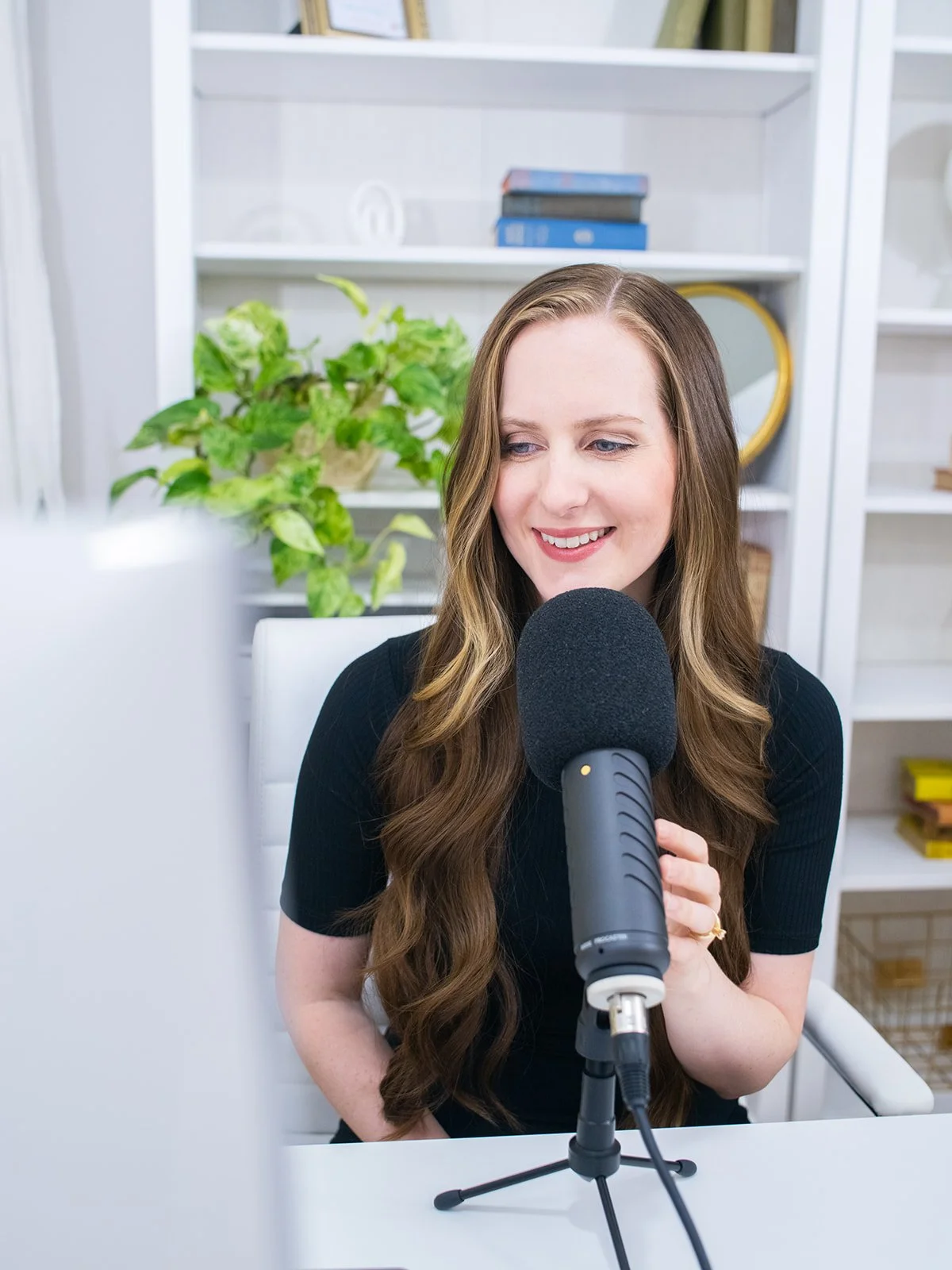
Podcasting has cost me money directly — podcast editors, software, hosting. Directly, I've earned $0 in ad revenue because I've chosen not to work with sponsors.
But indirectly? Hundreds of thousands of dollars in product sales from podcast listeners over the five years I've been running mine.
The two main monetization paths are your own products or sponsorships (which can pay anywhere from a few hundred to a few thousand dollars per episode, depending on your audience size). It's a slower burn than YouTube in terms of audience growth, but it builds real loyalty.
So Which Online Business Model Should You Start?
Here's the honest answer: the best online business is the one you'll actually stick with long enough to make it profitable.
That said, here's how I'd roughly rank them based on my experience:
Strong recommendations: Courses, memberships, YouTube, Etsy, print on demand, Shopify (if you commit to the marketing).
Good starting point, but limited scale: Coaching — excellent to start, harder to grow without adding other models.
Proceed with caution: Affiliate marketing (better as a passive add-on than a primary strategy), dropshipping (real potential but real risk).
The most important filter? Pick the model that matches how you like to work. If you love teaching, courses and memberships make sense. If you're creative and visual, print on demand or Etsy. If you want to document your expertise and build a long-term platform, YouTube or blogging.
Once you see that alignment clearly, you simply cannot un-see it — and it makes the hard work of building feel a lot less hard.

VALIDATE
Thinking about starting an online business but not sure if your idea is solid? Check out the Validate program — an 8-week accelerator that guides you through market research, validating demand, and landing your first sale.
Enrollment opens a couple of times per year.