How to Prioritize When Everything Feels Important
Ever sit down at your desk, look at your to-do list… and feel your chest tighten a little?
Everything feels important.
Even urgent.
Leaving you with no idea where to start. 😖
If you’ve ever stared at a mile-long list of tasks and thought, “How am I supposed to do all of this?” — this post is for you.
Today, I’m going to walk you through a simple, practical system you can use to:
Sort through a chaotic to-do list
Identify what’s actually urgent
Clarify what’s truly important
Decide exactly what to work on next
This is the same framework I use when my own plate feels full — and it works whether you’re running an online business, launching a new project, or just juggling a lot of moving pieces.
Let’s simplify this. 💛
Step 1: Organize Tasks by Project
When everything feels important, it’s usually because everything is mixed together.
You’ve got:
Podcast tasks, YouTube tasks, Instagram tasks, A course launch, Admin work, DMs… and on and on.
And they’re all living in one giant, overwhelming list.
The very first thing you need to do is group your tasks by project.
For example, let’s say your business currently includes:
A podcast
A YouTube channel
Instagram
A course launch
Instead of one messy list, separate your tasks into those categories.
Immediately, something magical happens. Even if you just stop here, you’re going to immediately feel way more clarity and calm.
Even if you use a project management tool like Asana or ClickUp, the principle is the same. (But it’s totally okay if you’re just using a spreadsheet! This will 100% still work.)
The goal is simple:
Stop thinking in terms of tasks. Start thinking in terms of projects.
Step 2: Sequence the Tasks (What Has to Come First?)

Once everything is grouped by project, the next step is sequencing.
This isn’t about urgency just yet.
We’re starting with logic.
Ask yourself:
What needs to happen first?
What depends on something else being done?
What cannot move forward until something else is complete?
For example:
If you’re launching a course, you may need to:
Outline the lessons
Create the workbook
Collect testimonials
Write the sales page
Write launch emails
Test checkout
You can’t write the sales page before you know what’s in the course.
And maybe you need to outline the lessons before you can create the workbook.
Sequencing cuts down your list of potential to-do’s to ONLY the first/next possible task for each project. So this step alone will dramatically cut your “to-do right now” list down.
Step 3: Rate Each Project’s Urgency and Importance
Now we zoom out.
Instead of looking at all those tasks, look at your projects.
For each project, rate:
Urgency (1–10)
Importance (1–10)
This is huge, because when everything feels important… nothing actually is.
Rating each project forces you to face the facts.
And those “facts” create peace.
Step 4: Add Deadlines & Clarify Consequences
If you stop with “Step 3,” you’ll have made a LOT of progress on simplifying your to-do list and figuring out what you should focus on.
But, there are a couple more steps that can make this method even more effective.
So, for Step 5, ask this question about each task on your list:
What happens if this doesn’t get done?
Answer this question as practically (and unemotionally) as possible.
For example:
If you miss a podcast deadline → you may lose consistency and trust.
If you delay a course launch → you lose revenue.
If you skip YouTube for a week → growth slows.
If you don’t post on Instagram → algorithm momentum dips.
Now ask:
Is there a hard deadline?
And is there a real consequence if that deadline isn’t met?
Sometimes we realize:
“This actually isn’t that big of a deal.”
Other times we realize:
“Oh… this one matters.”
When you face the urgency and real consequences for each of your tasks, the priority becomes obvious.
Step 5: Rank the First Task in Each Project
Most people try organize their entire to-do list… but that’s not actually necessary.

You only need to rank the next task for each project.
Why?
Because if you’ve sequenced correctly, the rest can’t happen yet anyway.
Why This System Works (Psychologically Speaking)
There’s a reason this works so well.
When your brain sees:
20+ unrelated tasks
Undefined deadlines
Unclear consequences
It interprets that as danger.
Research in cognitive psychology shows that unfinished tasks create mental tension — known as the Zeigarnik Effect. Your brain keeps them open like browser tabs.
This system closes those tabs.
It answers:
What matters?
When does it matter?
What happens if I don’t do it?
What comes first?
And once your brain has clarity… it relaxes. And a relaxed brain is a clear and intelligent brain.
What If Everything Truly Feels Equally Important?
Sometimes you look at two projects and think:
“They’re tied.”
In that case, here are a few ways you can break the tie:
Which one has the sooner deadline?
Which one has the greater financial impact?
Which one affects trust or reputation more?
Which one supports your long-term goal most directly?
If you still can’t decide?
Just choose one so you can move forward.
It doesn’t have to be the “right” decision. Progress on a good thing is progress in the right direction. Indecision wastes more time than imperfect prioritization ever will.
The Key Part of This Entire Process
Honestly?

It’s not the rating scale.
It’s not the urgency numbers.
It’s not even the consequences column.
It’s this:
Organizing by project and sequencing correctly.
That alone eliminates so much chaos.
Because once you know what project matters most, and you know the first domino inside it, the path becomes obvious.
A Quick Bonus: Don’t Confuse “Urgent” With “Loud”
Responding to DMs feels urgent.
Notifications feel urgent.
Small admin tasks feel urgent.
But they’re often not the most important.
Launching a product.
Building a funnel.
Publishing cornerstone content.
Those things move your business forward.
But they’re quiet.
No notifications yell at you to do them.
So be careful.
Don’t let loud tasks hijack your day.
Final Thoughts: You’re Not Behind
If everything feels important right now…
You’re not failing.
You’re probably just growing!
Growth creates complexity.
Complexity requires systems.
And once you have a system?
You’ll stop spinning your wheels and start moving forward again.
You don’t need to do everything today. You just need to do the right next thing.
And that becomes much easier when you can clearly see:
What project matters most
What comes first
What the real consequences are
And what can wait
To make this easier for you, I created a simple prioritization spreadsheet that includes all five steps outlined above.
You can download the free spreadsheet template and start using it right away.
It’s simple, practical, and it will help you move from overwhelmed to organized.
Grab your copy and give yourself the clarity you’ve been needing. 💛
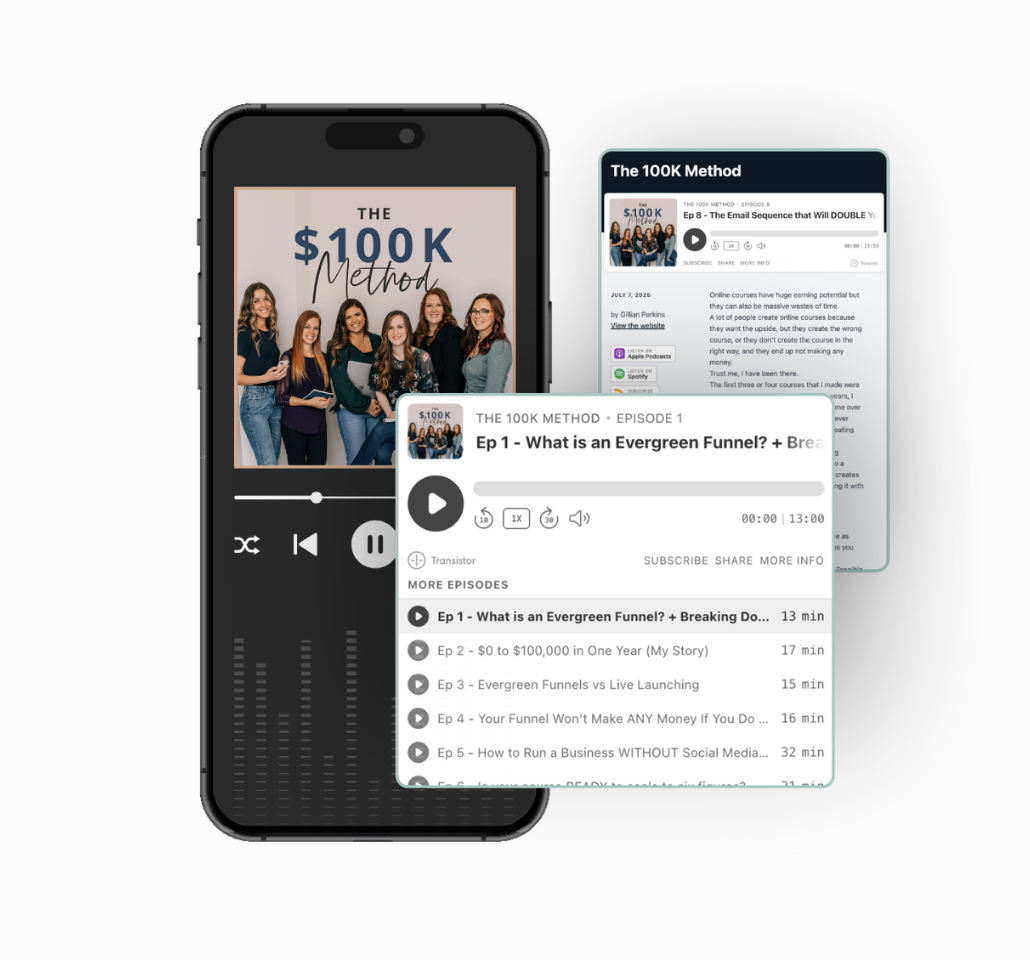
Free Limited-Series Podcast
I didn’t set out to make $100K. I just wanted a business that paid the bills and gave me freedom. Over the years, I’ve refined the simple systems and strategies that made it possible… and they’ve helped hundreds of other entrepreneurs do the same.
In The $100K Method podcast, I share how I did it — and how you can, too.